Animation
Resonant sand plate
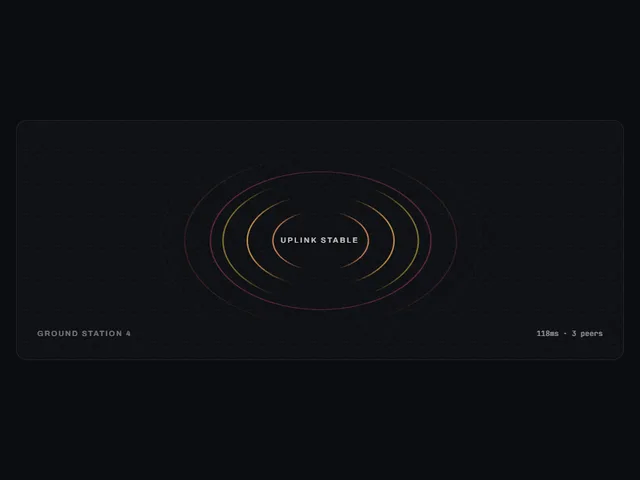
Resonant sand plate: Fine sand on a vibrating steel plate hops off the shaking areas and settles along the still lines, redrawing a new figure each time the tone changes.
Using Resonant sand plate
Resonant sand plate uses the card preview frame with a dark theme setting.
Customize the preview
These controls are passed to the demo. Defaults and limits describe the preview; consult the implementation for its full prop API.
| Control | Type | Default | Preview limits |
|---|---|---|---|
accent | color | #38BDF8 | No additional limit in the metadata. |
sandColor | color | #E8DCC4 | No additional limit in the metadata. |
toneHold | number | 5.5 | From 2 to 15; step 0.5 |
density | select | medium | Options: fine, medium, coarse |
vigor | number | 1 | From 0.4 to 2; step 0.1 |
autoTone | boolean | true | No additional limit in the metadata. |
Which frameworks are available for Resonant sand plate?
Resonant sand plate is available for React, Vue, Svelte, Astro, HTML. The live preview uses React; the source observations below apply to index.tsx. Check the selected port before relying on the same interactions.
What does Resonant sand plate depend on?
The React metadata lists these npm dependencies beyond React: clsx.
What accessibility details are visible in Resonant sand plate?
The React source for Resonant sand plate includes: attributes and handlers (aria-hidden, aria-label, onKeyDown, tabIndex); explicit roles (group); key comparisons (ArrowDown, ArrowLeft, ArrowRight, ArrowUp, Enter, Space). These are source observations. Verify accessible names, focus order and keyboard behavior in the composed page.
How does Resonant sand plate handle reduced motion?
Resonant sand plate reads the motion preference in its React source through matchMedia(prefers-reduced-motion). Check the full implementation, shared styles and selected port with reduced motion enabled; these observations do not establish that every animation stops.